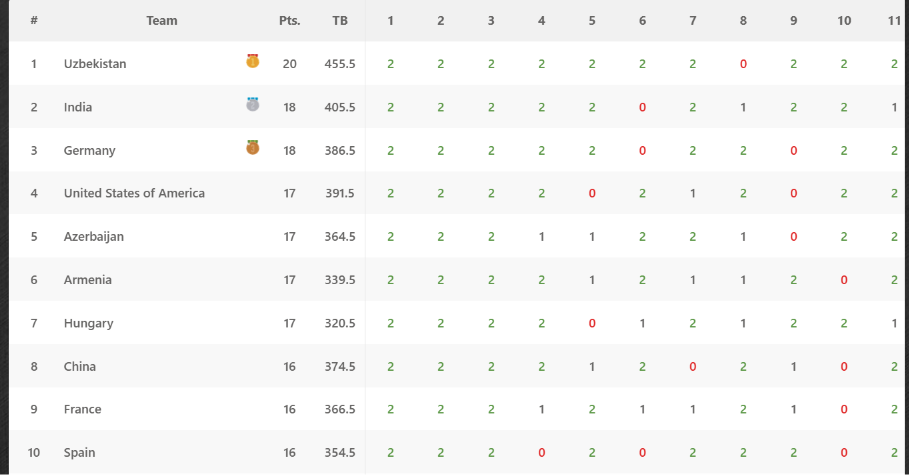
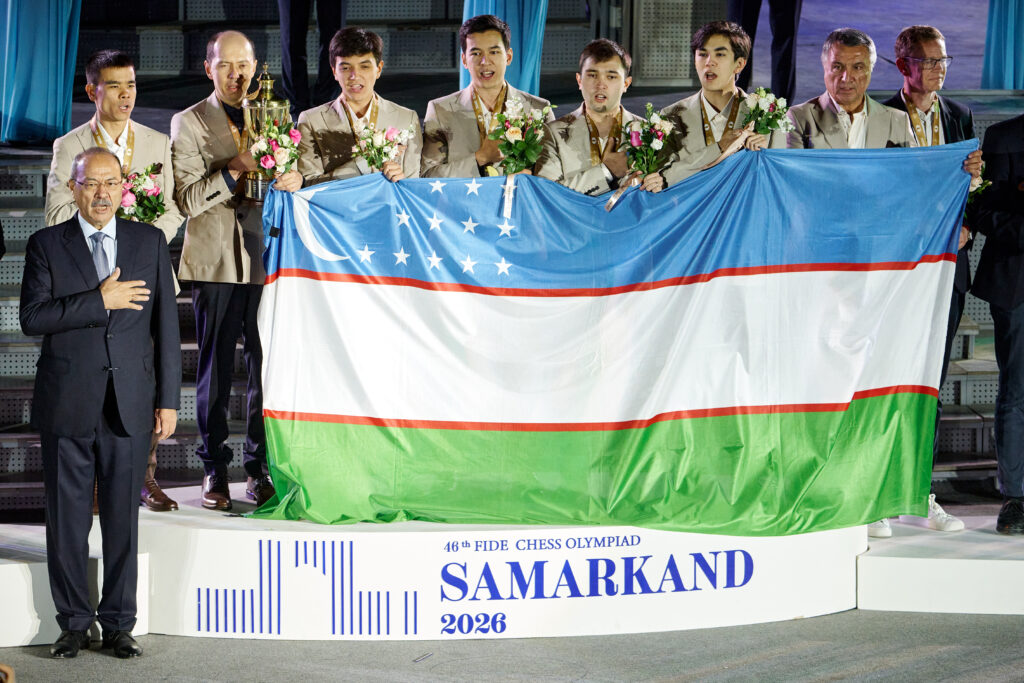
Uzbekistan
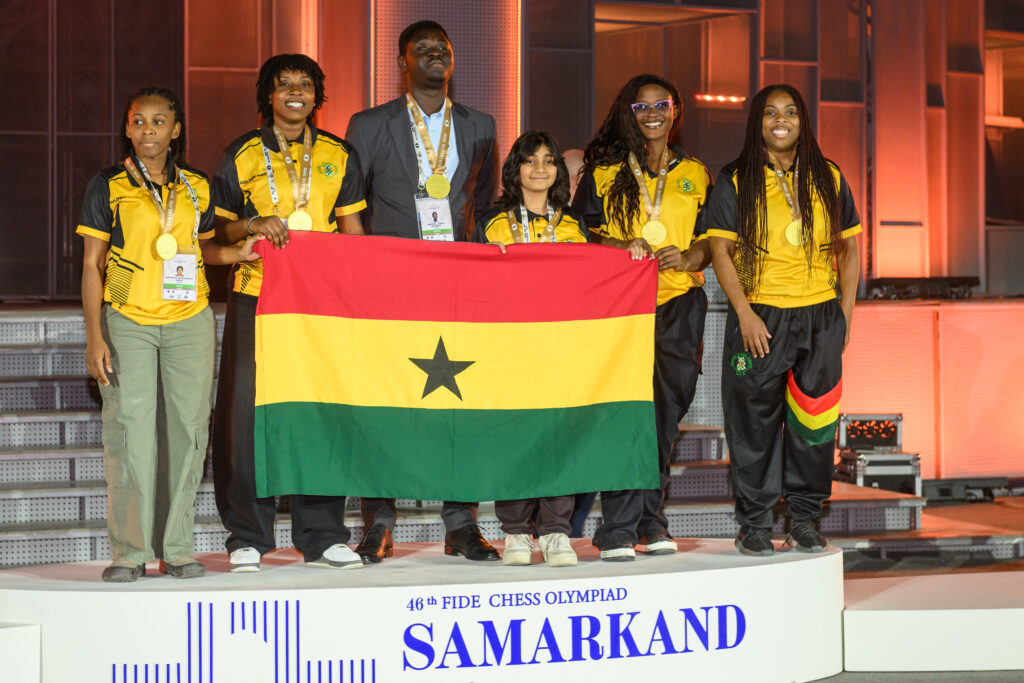
conquered the chess world on home soil, defeating Ukraine in the final round of the 46th FIDE Chess Olympiad 2026 in Samarkand. India took silver and Germany claimed their first medal in over two decades.
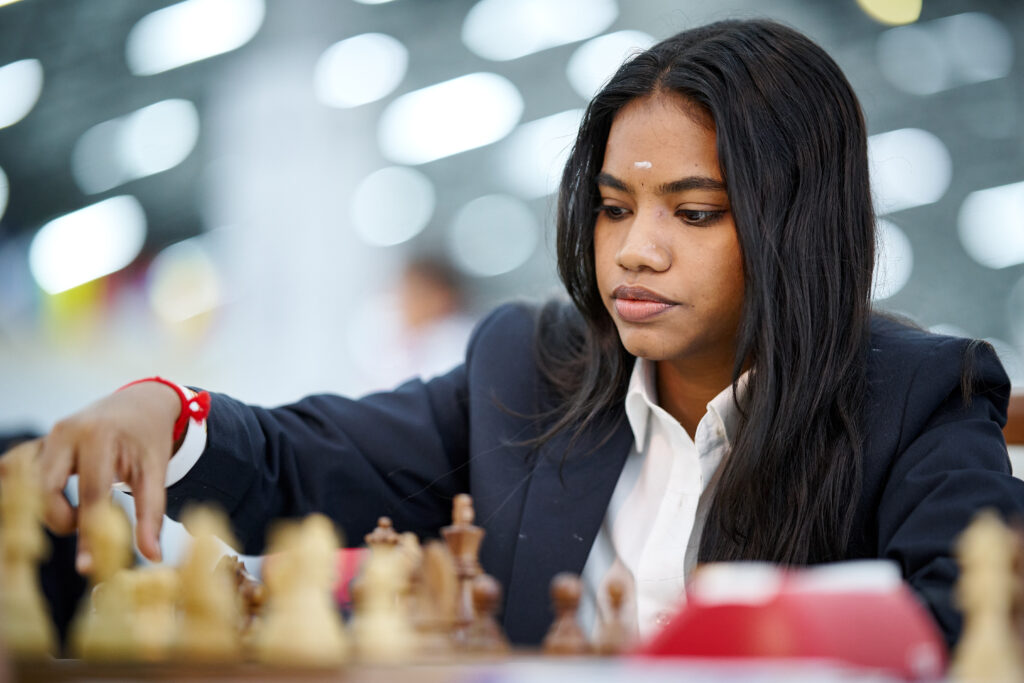
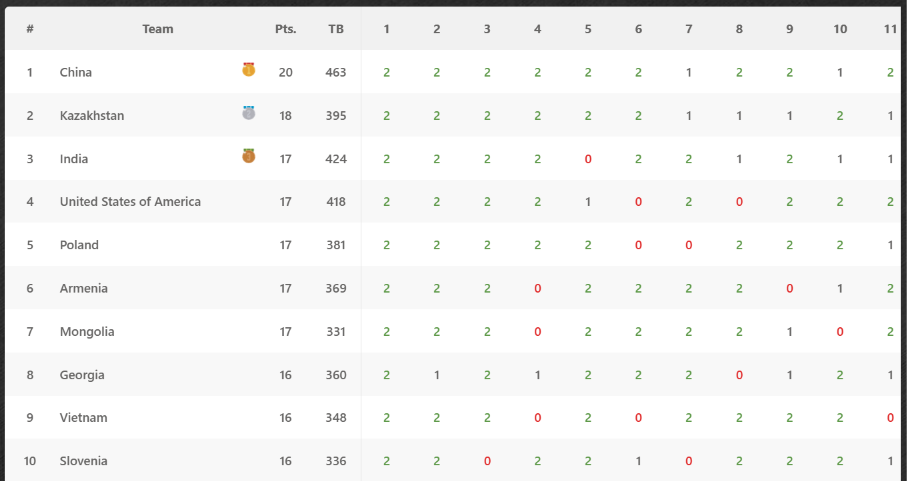
China continued its dominance in the Women’s section with a seventh gold medal. Outperforming Team India which was relegated to third place after Kazakhstan. A standout performance came from India’s Savitha Shri, who delivered a remarkable 9/10 score on board 4, translating into an elite 2596 rating performance.
Africa’s Olympiad Reality: A Continent Fighting Structural Headwinds
But for African federations, the Olympiad is never just a tournament — it is a mirror. It reflects our structural weaknesses, our emerging strengths, and the uncomfortable truth that talent alone is not enough.
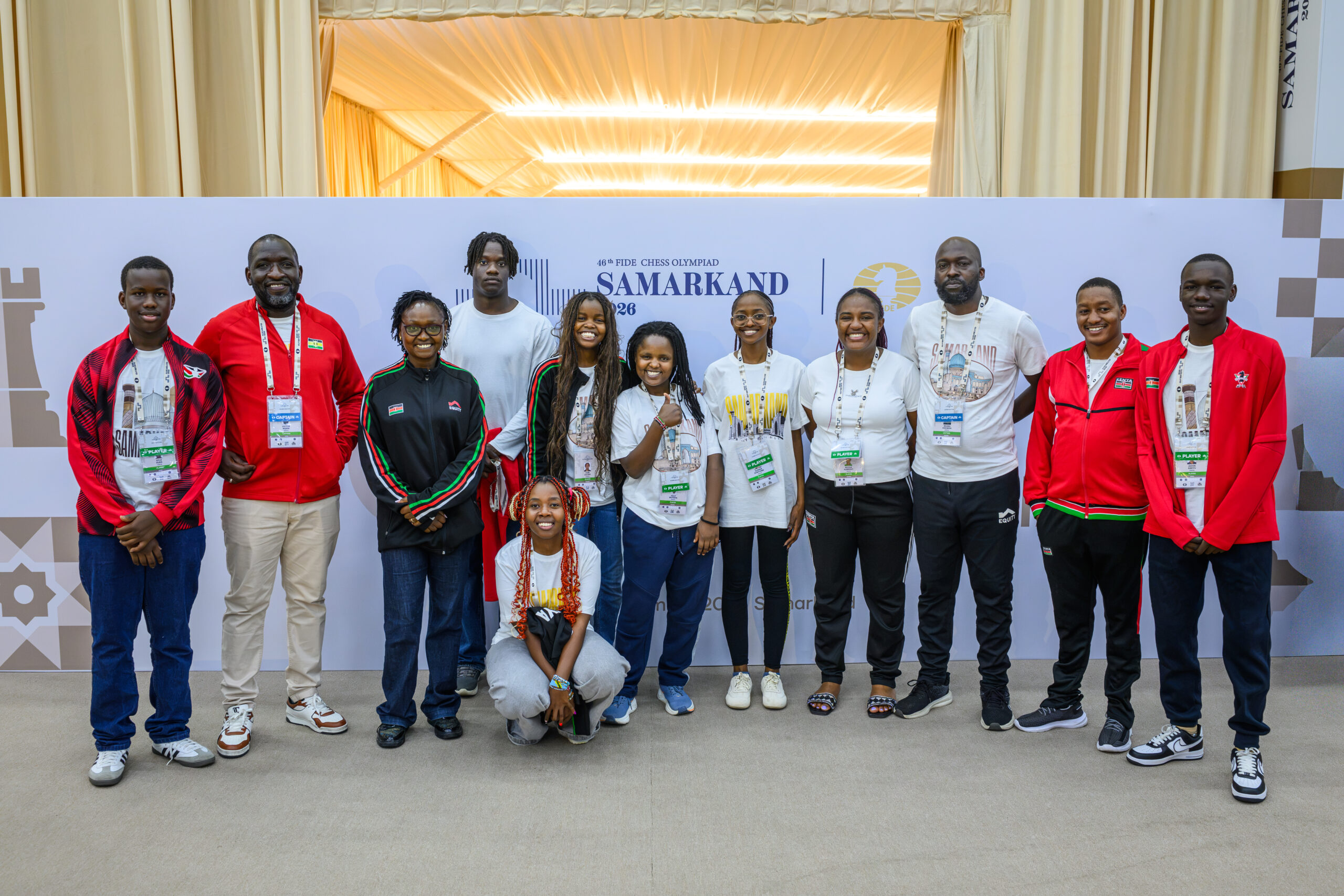
Kenya’s performance, both in the Open and Women’s sections, sits squarely in the middle of this continental story.
The African standings tell a familiar story: scattered brilliance, inconsistent depth, and chronic logistical disadvantages.
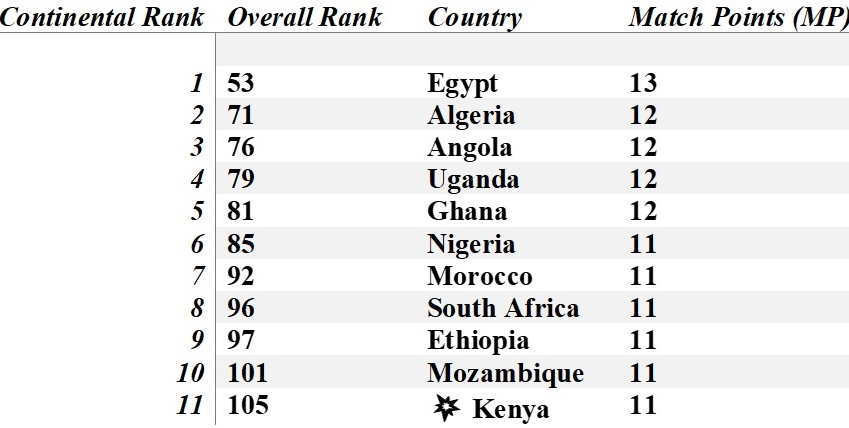
Women’s Section (Kenya: 105th globally, 11th in Africa)
Egypt topped Africa with 13 match points, followed by Algeria, Angola, and Uganda. Kenya finished with 11 match points — respectable, but still outside the top 100 globally.
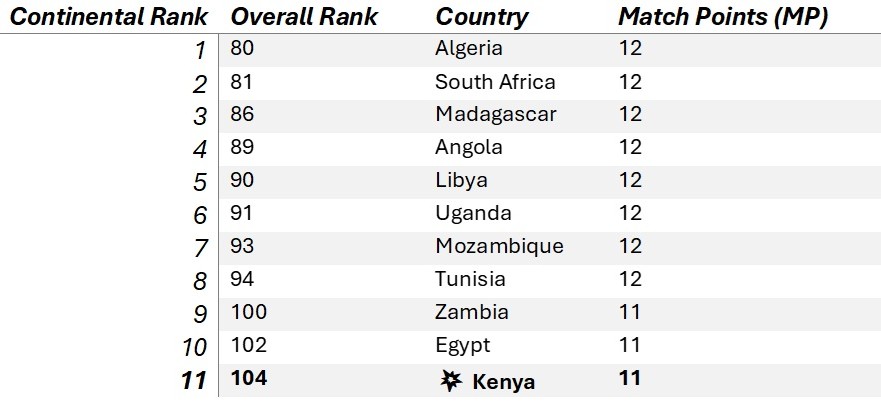
Open Section (Kenya: 107th globally, 11th in Africa)
Algeria led Africa, followed closely by South Africa and Madagascar. Kenya finished with 11 match points, again landing in the mid‑table zone.
Why Africa Struggles: The Five Structural Barriers We Must Stop Ignoring
The Olympiad exposes Africa’s competitive disadvantages more brutally than any other event.
- Visa Denials and Travel Chaos
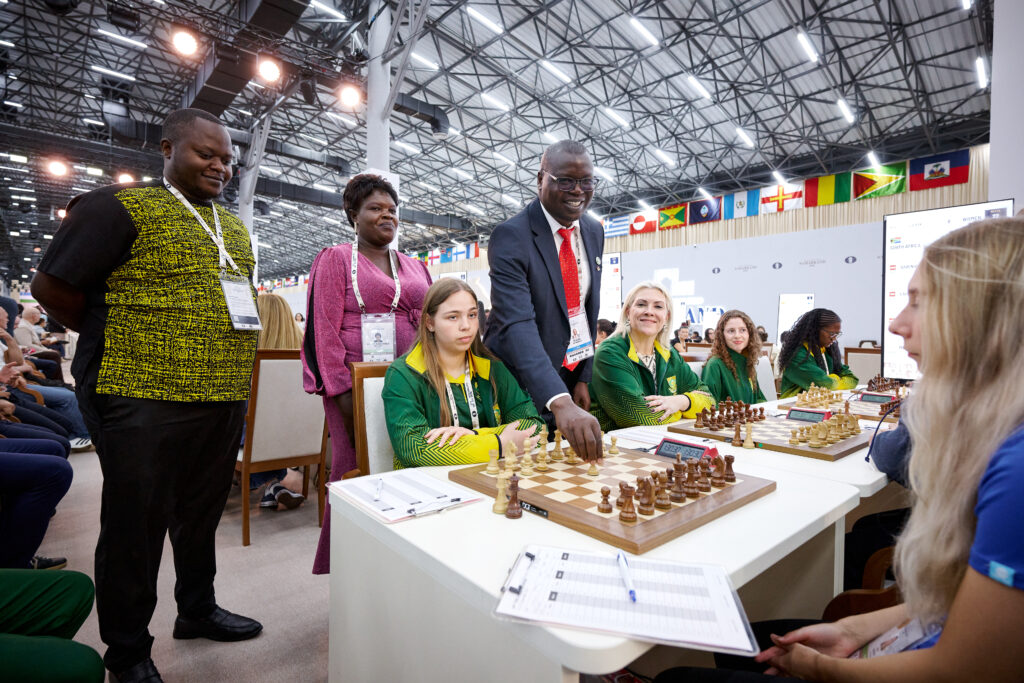
Namibia’s players were rejected at the airport. Coaches had to play. Teams arrived exhausted. This is not a sporting issue — it is a diplomatic one. Most African teams arrive on the day just before the tournament and don’t have time to acclimatize.
- Scarcity of Elite Norm Tournaments
GM/IM norms live in Europe and Asia. African players must self‑fund expensive travel. Many of our strongest players remain underrated simply because they cannot access norm‑dense events.
- Weak Opening Preparation Infrastructure
Top nations use private engine clusters and neural networks. African teams rely on laptops and free servers. At Olympiad level, this is a losing battle.
- Lack of Salaried Professionalism
Most African players are amateurs balancing jobs or studies. Meanwhile, India, Uzbekistan, and the US pay their Olympiad teams full‑time salaries and hire legendary coaches.
- Geographic Isolation and High Travel Costs
Flying within Africa is often more expensive than flying to Europe. Without regular exposure to strong classical tournaments, rating stagnation becomes inevitable.
These are not excuses — they are structural realities that must be confronted head‑on.
Kenya’s Olympiad Performance: A Mid‑Table Finish with Signs of a Coming Surge
Kenya’s results were consistent with its current developmental stage: competitive, ambitious, but still constrained by structural limitations.
Standout Individual Performances
Jadon Simiyu
One of the most compelling breakthroughs for Kenya in Samarkand came from 14‑year‑old Jadon Simiyu, whose Olympiad campaign marked a decisive turning point in his rise toward elite status.
Playing with a maturity well beyond his years, Simiyu delivered a commanding 2234 rating performance and secured an extraordinary +40 rating gain — a leap that propelled him past the 2200 barrier, making him only the second Kenyan in history to reach this milestone after Peter Gilruth.
Zuri Kaloki
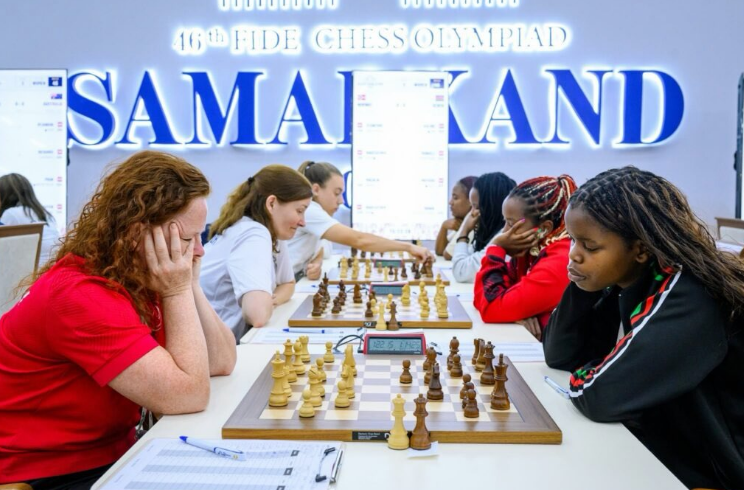
A standout narrative of Kenya’s rising firepower at the 46th Chess Olympiad in Samarkand was the fearless performance of 16‑year‑old Woman FIDE Master (WFM) Zuri Kaloki playing on board 1.
Making her highly anticipated Olympiad debut, the young prodigy consistently punched above her weight and demonstrated remarkable tactical maturity against seasoned international opposition. Her campaign included a spectacular upset victory over Malaysia’s higher‑rated WFM Tan Li Ting (2067), a result that underscored her ability to thrive under the immense pressure of the world stage.
Kaloki showed a resilient fighting spirit that helped the Kenyan Women’s team briefly lead the African standings early in the tournament. Her run in Uzbekistan not only affirmed her status as one of the continent’s brightest rising stars, but also embodied the exact blueprint Kenya must follow to build its next generation of Olympiad‑ready talent.
Sasha Mongeli
Sasha Mongeli produced a steady, composed Olympiad performance that reflected her growing maturity on the international stage. Her +12 rating gain brought her within striking distance of the 2000 mark required for the WIM title. Throughout the event, Mongeli provided reliable results against higher‑rated opponents, demonstrating improved opening structure and calm defensive technique. Her showing in Samarkand reinforced her status as a key pillar of Kenya’s rising women’s squad.
These are not small achievements — they are signals of a generational shift.
The Junior Revolution Is Real
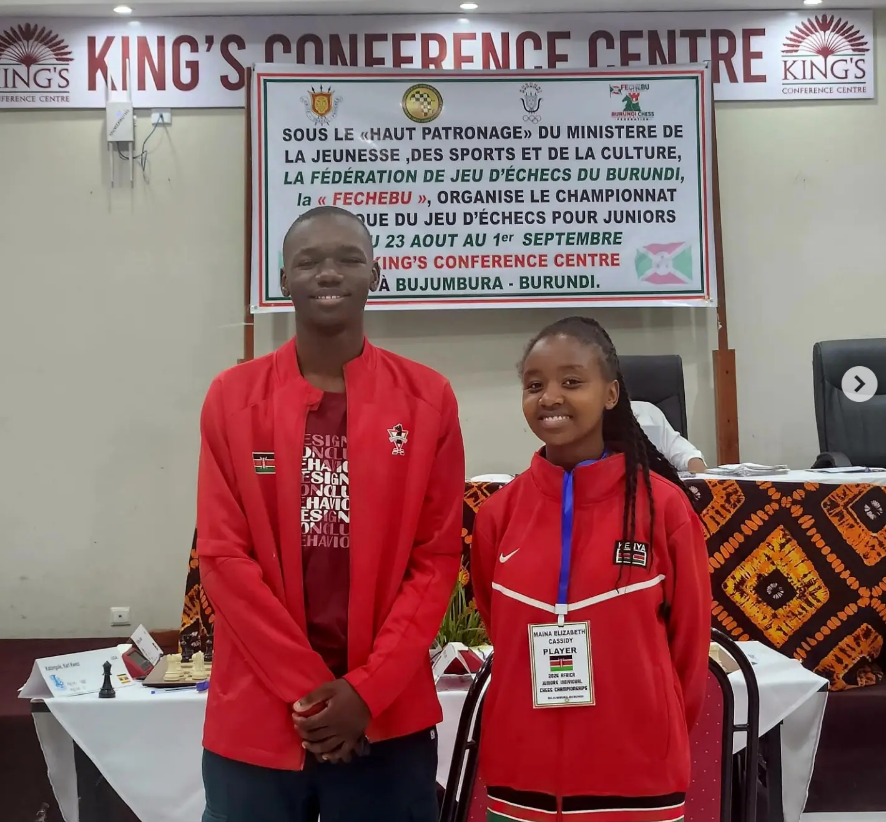
Kenya broke a 36‑year medal drought at the Africa Junior Championship. Simiyu and Elizabeth Cassidy Maina both secured international title norms.
This is the strongest junior cohort Kenya has ever produced.
The Mid‑Table Ceiling
Kenya’s Olympiad ceiling remains the same: breaking into the top 50 globally requires resources, not just talent.
The women’s team finishing 105th out of 189 nations is a strong result — but the next leap demands structural change.
Kenya’s Strengths: What We Are Doing Right
- Local Norm‑Hunting Opportunities
Events like the Maven’s International Championship bring titled players to Nairobi, reducing the “financial distance penalty.”
- Institutional Depth and Social Impact
Kenya is a global leader in chess‑for‑development initiatives:
- Chess for Protection (Kakuma Refugee Camp)
- Chess in penitentiaries
- Dedicated team at the World Olympiad for Persons with Disabilities
This is national chess culture — not just competitive chess.
My Recommendations: The 7 Steps Kenya Must Take to Break Into the Top 50
Here is the uncomfortable but necessary roadmap:
- Build a National Opening Preparation Centre
A shared cloud‑engine cluster for national teams and elite juniors. This is the single most impactful investment Kenya can make.
- Fund Annual Overseas Norm Tours
Send 6–10 elite players to Europe/Asia every year. Norms cannot be earned locally — this is unavoidable.
- Hire a Permanent GM‑Level National Coach
Not a tournament captain — a year‑round theoretician guiding opening prep, team strategy, and junior development.
- Create a National Junior Residency Program
A 6‑month intensive training camp for the top 20 juniors. Daily classical games, engine prep, and GM lectures.
- Establish a Corporate Chess Sponsorship Consortium
Kenya has strong corporate sectors (banking, telecom, insurance). Chess needs a unified sponsorship model like athletics.
- Fix Travel Logistics Early
Partner with government agencies to streamline visa processing for Olympiad and continental events way ahead of schedule.
- Build a National Tournament Calendar with Rating Floors
Kenya needs 6–8 classical events annually with strict rating floors (e.g., 1800+). This prevents rating stagnation and accelerates competitive growth.
Closing note:
Kenya is not stuck — it is rising. The mid‑table finish is not a ceiling; it is a checkpoint. With structural investment, Kenya can realistically target a top‑50 Olympiad finish within 4 years. Now that our very own Bernard Wanjala is at the helm of African Chess I believe he can make this happen.