The Global Chess Revolution in Schools – and What Kenya Must Learn

The Global Chess Revolution in Schools – and What Kenya Must Learn

Share this post :
Facebook
Twitter
LinkedIn
Pinterest

Leave a Reply

Your email address will not be published. Required fields are marked *

The Secret Station

Lorem ipsum dolor sit amet consectetur adipiscing elit dolor

Over the past two years, a quiet revolution has swept across education systems worldwide: chess is being formally integrated into school curricula and extracurricular frameworks. From South Asia to South America, and now prominently in the Middle East, governments are recognizing that chess is a powerful pedagogical tool for developing critical thinking, concentration, decision‑making, and resilience.

A major milestone was just achieved in Iraq’s Kurdistan Region, where chess has officially been integrated into the school curriculum for Grades 7, 8, and 9 through a structured educational program backed by the Ministry of Education, the Khanzad Chess Club, and the Iraqi Chess Federation. As reported by ChessBase on chess entering school curricula in Kurdistan FIDE has rightfully hailed this achievement as a monumental step forward for chess education.

Yet as global momentum builds, Kenya finds itself at a crossroads. We have taken promising first steps, but without structural reform, we risk squandering an opportunity that could benefit millions of children.


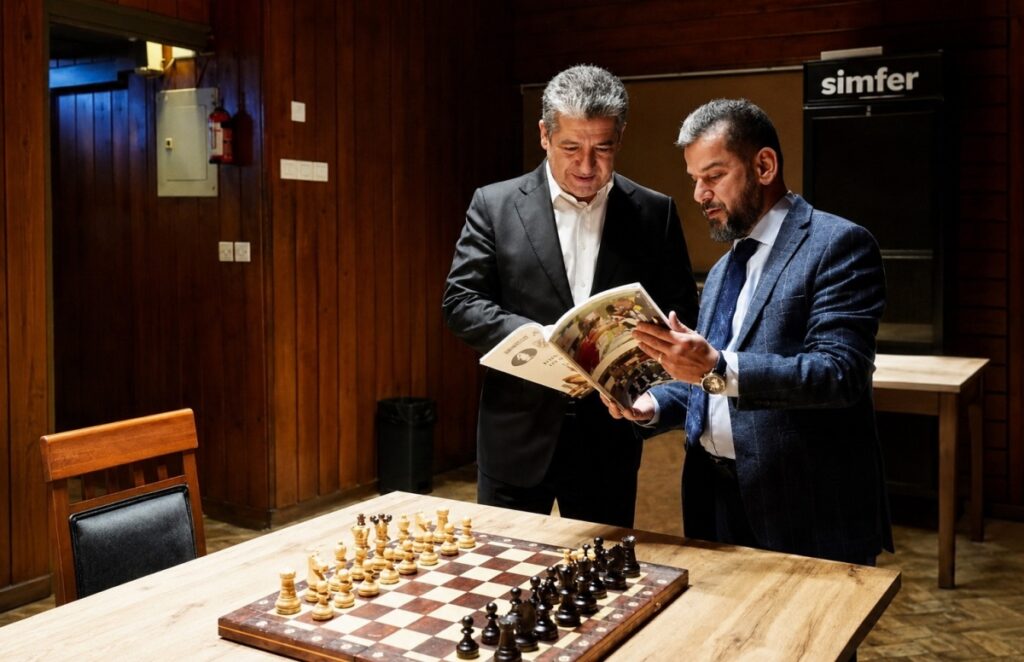
Dr. Dlzar Hamasalih Qadir (right), President of Khanzad Chess Club, introduces the Chess for Schools textbook to Mr. Masrour Barzani, Prime Minister of the Kurdistan Region. Photo: Chessbase News


Global Inspiration: How Other Nations are Doing It

Countries across the globe are treating chess as a systemic intervention rather than a one-off project:

  • Iraq (Kurdistan Region) – 2026: Formally introduced chess to Grades 7, 8, and 9. Backed by a 15-page section in the official Physical Education Teacher’s Guide and a one-week training program for 150 PE teachers, it stands as a textbook example of collaboration between local clubs, federations, and government ministries.
  • Pakistan (2024): Launched an “Intellectual Sports Initiative” aiming to introduce chess to 10,000 public schools and 6 million children, backed directly by the Prime Minister’s office.
  • Kazakhstan (2024–2025): Integrated “Chess Fundamentals” into over 1,500 schools across 20 regions, complete with structured teacher training.
  • Guatemala (2026): Set aside $1.5 million for a national school chess program backed by official ministerial resolution.


Kenya’s Progress – and the Gaps We Must Address

Kenya has not been idle. In 2026, chess was formally added to the Kenya Secondary Schools Sports Association (KSSSA) calendar, and the Ministry of Education included it in the national schools’ sports and co‑curricular calendar for Term 2. Teacher training has also kicked off in regions like Kericho, Mombasa, Kakamega, and Elgeyo‑Marakwet.

However, if we look closely at our structural framework, glaring gaps remain:

  • Lack of Curriculum Approval: The Kenya Institute of Curriculum Development (KICD) and the Teachers Service Commission (TSC) note that chess lacks formal approval as an official subject under the Competency‑Based Curriculum (CBC).
  • Uncertified Training: Unlike Iraq, where 150 PE teachers received formal, certified training before rollout, our local teacher workshops currently lack formal TSC accreditation.
  • No Approved Teaching Materials: Iraq developed a dedicated 15-page teacher’s guide; Kenya lacks nationally approved teaching resources.
  • Child Safety and Data Compliance: TSC has flagged that collecting minor data for tournaments must strictly adhere to Kenya’s Data Protection Act.
  • Funding and Political Will: While countries like Guatemala and Pakistan have pumped millions and secured high-level political champions, Kenya’s chess-in-schools drive needs broader state backing.

What Kenya Can Learn from Iraq’s Kurdistan Model

Element

Kurdistan, Iraq

Kenya (current)

Curriculum

15‑page section in official teacher’s guide

No KICD‑approved materials

Teacher training

150 PE teachers trained & certified

Ad‑hoc workshops, uncertified

Institutional partnership

Chess club + Ministry + National Federation

Fragmented, no formal MoU

Political backing

Prime Minister personally engaged

No high‑level champion

Target grades

Grades 7, 8 and 9

No defined grade targets

As the Kurdistan model proves, you don’t need a wealthy superpower to put chess in schools—you need political will, institutional cooperation, trained teachers, and approved materials.

Moving from Paper to Practice

To turn our calendar entries into a transformative experience for Kenyan children, the Chess Kenya Federation (CKF) and the Ministry of Education must partner to:

  1. Secure KICD approval for curriculum legitimacy, following Iraq’s model of embedding chess guides.
  2. Accredit teacher training through the TSC.
  3. Develop official teaching aids and lesson plans tailored to the CBC framework.
  4. Set clear scaling targets backed by sustainable funding.
  5. Enforce child protection and data compliance guardrails from day one.


The pieces are on the board, and global pioneers like Iraq have just made a brilliant move. Now it is time for Kenya to make the right moves—structurally, systemically, and sustainably—for the sake of our children.


What do you think, Kenya Chess Hub community? Should chess be an official part of Kenya’s CBC curriculum? Drop your thoughts in the comments below, and reach out to the Chess Kenya Federation if you’re a teacher or administrator ready to bring chess to your school!

 

Share this post :
Facebook
Twitter
LinkedIn
Pinterest

Leave a Reply

Your email address will not be published. Required fields are marked *

The Secret Station

Lorem ipsum dolor sit amet consectetur adipiscing elit dolor
Share this post :
Facebook
Twitter
LinkedIn
Pinterest

Leave a Reply

Your email address will not be published. Required fields are marked *

The Secret Station

Lorem ipsum dolor sit amet consectetur adipiscing elit dolor

Over the past two years, a quiet revolution has swept across education systems worldwide: chess is being formally integrated into school curricula and extracurricular frameworks. From South Asia to South America, and now prominently in the Middle East, governments are recognizing that chess is a powerful pedagogical tool for developing critical thinking, concentration, decision‑making, and resilience.

A major milestone was just achieved in Iraq’s Kurdistan Region, where chess has officially been integrated into the school curriculum for Grades 7, 8, and 9 through a structured educational program backed by the Ministry of Education, the Khanzad Chess Club, and the Iraqi Chess Federation. As reported by ChessBase on chess entering school curricula in Kurdistan FIDE has rightfully hailed this achievement as a monumental step forward for chess education.

Yet as global momentum builds, Kenya finds itself at a crossroads. We have taken promising first steps, but without structural reform, we risk squandering an opportunity that could benefit millions of children.


Dr. Dlzar Hamasalih Qadir (right), President of Khanzad Chess Club, introduces the Chess for Schools textbook to Mr. Masrour Barzani, Prime Minister of the Kurdistan Region. Photo: Chessbase News


Global Inspiration: How Other Nations are Doing It

Countries across the globe are treating chess as a systemic intervention rather than a one-off project:

  • Iraq (Kurdistan Region) – 2026: Formally introduced chess to Grades 7, 8, and 9. Backed by a 15-page section in the official Physical Education Teacher’s Guide and a one-week training program for 150 PE teachers, it stands as a textbook example of collaboration between local clubs, federations, and government ministries.
  • Pakistan (2024): Launched an “Intellectual Sports Initiative” aiming to introduce chess to 10,000 public schools and 6 million children, backed directly by the Prime Minister’s office.
  • Kazakhstan (2024–2025): Integrated “Chess Fundamentals” into over 1,500 schools across 20 regions, complete with structured teacher training.
  • Guatemala (2026): Set aside $1.5 million for a national school chess program backed by official ministerial resolution.


Kenya’s Progress – and the Gaps We Must Address

Kenya has not been idle. In 2026, chess was formally added to the Kenya Secondary Schools Sports Association (KSSSA) calendar, and the Ministry of Education included it in the national schools’ sports and co‑curricular calendar for Term 2. Teacher training has also kicked off in regions like Kericho, Mombasa, Kakamega, and Elgeyo‑Marakwet.

However, if we look closely at our structural framework, glaring gaps remain:

  • Lack of Curriculum Approval: The Kenya Institute of Curriculum Development (KICD) and the Teachers Service Commission (TSC) note that chess lacks formal approval as an official subject under the Competency‑Based Curriculum (CBC).
  • Uncertified Training: Unlike Iraq, where 150 PE teachers received formal, certified training before rollout, our local teacher workshops currently lack formal TSC accreditation.
  • No Approved Teaching Materials: Iraq developed a dedicated 15-page teacher’s guide; Kenya lacks nationally approved teaching resources.
  • Child Safety and Data Compliance: TSC has flagged that collecting minor data for tournaments must strictly adhere to Kenya’s Data Protection Act.
  • Funding and Political Will: While countries like Guatemala and Pakistan have pumped millions and secured high-level political champions, Kenya’s chess-in-schools drive needs broader state backing.

What Kenya Can Learn from Iraq’s Kurdistan Model

Element

Kurdistan, Iraq

Kenya (current)

Curriculum

15‑page section in official teacher’s guide

No KICD‑approved materials

Teacher training

150 PE teachers trained & certified

Ad‑hoc workshops, uncertified

Institutional partnership

Chess club + Ministry + National Federation

Fragmented, no formal MoU

Political backing

Prime Minister personally engaged

No high‑level champion

Target grades

Grades 7, 8 and 9

No defined grade targets

As the Kurdistan model proves, you don’t need a wealthy superpower to put chess in schools—you need political will, institutional cooperation, trained teachers, and approved materials.

Moving from Paper to Practice

To turn our calendar entries into a transformative experience for Kenyan children, the Chess Kenya Federation (CKF) and the Ministry of Education must partner to:

  1. Secure KICD approval for curriculum legitimacy, following Iraq’s model of embedding chess guides.
  2. Accredit teacher training through the TSC.
  3. Develop official teaching aids and lesson plans tailored to the CBC framework.
  4. Set clear scaling targets backed by sustainable funding.
  5. Enforce child protection and data compliance guardrails from day one.


The pieces are on the board, and global pioneers like Iraq have just made a brilliant move. Now it is time for Kenya to make the right moves—structurally, systemically, and sustainably—for the sake of our children.


What do you think, Kenya Chess Hub community? Should chess be an official part of Kenya’s CBC curriculum? Drop your thoughts in the comments below, and reach out to the Chess Kenya Federation if you’re a teacher or administrator ready to bring chess to your school!

 

The Global Chess Revolution in Schools – and What Kenya Must Learn

Share this post :
Facebook
Twitter
LinkedIn
Pinterest

Leave a Reply

Your email address will not be published. Required fields are marked *

The Secret Station

Lorem ipsum dolor sit amet consectetur adipiscing elit dolor

Over the past two years, a quiet revolution has swept across education systems worldwide: chess is being formally integrated into school curricula and extracurricular frameworks. From South Asia to South America, and now prominently in the Middle East, governments are recognizing that chess is a powerful pedagogical tool for developing critical thinking, concentration, decision‑making, and resilience.

A major milestone was just achieved in Iraq’s Kurdistan Region, where chess has officially been integrated into the school curriculum for Grades 7, 8, and 9 through a structured educational program backed by the Ministry of Education, the Khanzad Chess Club, and the Iraqi Chess Federation. As reported by ChessBase on chess entering school curricula in Kurdistan FIDE has rightfully hailed this achievement as a monumental step forward for chess education.

Yet as global momentum builds, Kenya finds itself at a crossroads. We have taken promising first steps, but without structural reform, we risk squandering an opportunity that could benefit millions of children.


Dr. Dlzar Hamasalih Qadir (right), President of Khanzad Chess Club, introduces the Chess for Schools textbook to Mr. Masrour Barzani, Prime Minister of the Kurdistan Region. Photo: Chessbase News


Global Inspiration: How Other Nations are Doing It

Countries across the globe are treating chess as a systemic intervention rather than a one-off project:

  • Iraq (Kurdistan Region) – 2026: Formally introduced chess to Grades 7, 8, and 9. Backed by a 15-page section in the official Physical Education Teacher’s Guide and a one-week training program for 150 PE teachers, it stands as a textbook example of collaboration between local clubs, federations, and government ministries.
  • Pakistan (2024): Launched an “Intellectual Sports Initiative” aiming to introduce chess to 10,000 public schools and 6 million children, backed directly by the Prime Minister’s office.
  • Kazakhstan (2024–2025): Integrated “Chess Fundamentals” into over 1,500 schools across 20 regions, complete with structured teacher training.
  • Guatemala (2026): Set aside $1.5 million for a national school chess program backed by official ministerial resolution.


Kenya’s Progress – and the Gaps We Must Address

Kenya has not been idle. In 2026, chess was formally added to the Kenya Secondary Schools Sports Association (KSSSA) calendar, and the Ministry of Education included it in the national schools’ sports and co‑curricular calendar for Term 2. Teacher training has also kicked off in regions like Kericho, Mombasa, Kakamega, and Elgeyo‑Marakwet.

However, if we look closely at our structural framework, glaring gaps remain:

  • Lack of Curriculum Approval: The Kenya Institute of Curriculum Development (KICD) and the Teachers Service Commission (TSC) note that chess lacks formal approval as an official subject under the Competency‑Based Curriculum (CBC).
  • Uncertified Training: Unlike Iraq, where 150 PE teachers received formal, certified training before rollout, our local teacher workshops currently lack formal TSC accreditation.
  • No Approved Teaching Materials: Iraq developed a dedicated 15-page teacher’s guide; Kenya lacks nationally approved teaching resources.
  • Child Safety and Data Compliance: TSC has flagged that collecting minor data for tournaments must strictly adhere to Kenya’s Data Protection Act.
  • Funding and Political Will: While countries like Guatemala and Pakistan have pumped millions and secured high-level political champions, Kenya’s chess-in-schools drive needs broader state backing.

What Kenya Can Learn from Iraq’s Kurdistan Model

Element

Kurdistan, Iraq

Kenya (current)

Curriculum

15‑page section in official teacher’s guide

No KICD‑approved materials

Teacher training

150 PE teachers trained & certified

Ad‑hoc workshops, uncertified

Institutional partnership

Chess club + Ministry + National Federation

Fragmented, no formal MoU

Political backing

Prime Minister personally engaged

No high‑level champion

Target grades

Grades 7, 8 and 9

No defined grade targets

As the Kurdistan model proves, you don’t need a wealthy superpower to put chess in schools—you need political will, institutional cooperation, trained teachers, and approved materials.

Moving from Paper to Practice

To turn our calendar entries into a transformative experience for Kenyan children, the Chess Kenya Federation (CKF) and the Ministry of Education must partner to:

  1. Secure KICD approval for curriculum legitimacy, following Iraq’s model of embedding chess guides.
  2. Accredit teacher training through the TSC.
  3. Develop official teaching aids and lesson plans tailored to the CBC framework.
  4. Set clear scaling targets backed by sustainable funding.
  5. Enforce child protection and data compliance guardrails from day one.


The pieces are on the board, and global pioneers like Iraq have just made a brilliant move. Now it is time for Kenya to make the right moves—structurally, systemically, and sustainably—for the sake of our children.


What do you think, Kenya Chess Hub community? Should chess be an official part of Kenya’s CBC curriculum? Drop your thoughts in the comments below, and reach out to the Chess Kenya Federation if you’re a teacher or administrator ready to bring chess to your school!
 

Share this post :
Facebook
Twitter
LinkedIn
Pinterest

Leave a Reply

Your email address will not be published. Required fields are marked *

The Secret Station

Lorem ipsum dolor sit amet consectetur adipiscing elit dolor
Share this post :
Facebook
Twitter
LinkedIn
Pinterest

Leave a Reply

Your email address will not be published. Required fields are marked *

The Secret Station

Lorem ipsum dolor sit amet consectetur adipiscing elit dolor