Stop worrying about memorizing moves and start playing positions you actually enjoy.
Welcome to the “What Now?” Moment
Congratulations. You know how the pieces move. You understand what checkmate means, and you might even have a vague memory of what castling is. You’ve played a few games online, or maybe you’ve dusted off the old board from the closet.
But now you have a new goal: You want to play in a tournament.
Suddenly, the game feels different. You sit down at the board, your opponent makes a move, and your mind goes blank. You know you’re supposed to “develop your pieces,” but you aren’t sure where to put them. You’ve heard of the “Sicilian” and the “Ruy Lopez,” but they sound like exotic cocktails, not chess openings.
The fear of the opening is the single biggest barrier for adult beginners. It feels like you need to memorize a phone book just to survive the first ten moves.
Here is the secret that will save your sanity: You don’t need to memorize a phone book. You need a system.
This guide is for the busy adult with a spouse, three kids, a daytime job plus a weekend hustle, a dog, a cat and a partridge in a pear tree who wants to walk into a tournament hall with confidence, not fear. We aren’t going to turn you into a Grandmaster overnight. We are going to build a “starter kit” that lets you reach the middle game with a playable position.
Step 1: Forget Memorization. Learn Principles.
Before picking specific openings, you need to master the fundamental “Rules of the Road.” Following these principles lets you navigate almost any opening surprise safely.
The Three Golden Rules of the Opening
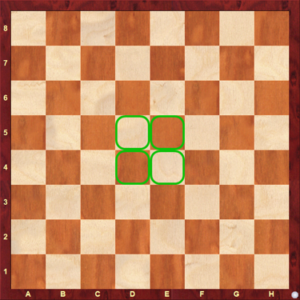
- Fight for the Center: The squares e4, d4, e5, and d5 represent the “High Street” of the board. Control these squares, and your pieces gain maximal mobility.
- Develop Your Pieces (Knights before Bishops): Move your pieces off the back rank. Knights generally develop first because their optimal squares are easier to define early on, whereas Bishops benefit from seeing how the central pawn structure settles.
- Get Your King Safe (Castle): Secure your King before starting an offensive drive. Castling relocates your King out of the dangerous central files while simultaneously activating your Rook. Aim to castle before move 10.
The Golden Rule of Club Play: If your opponent neglects center control, piece development, or King safety, do not chase early traps. Punish their oversight by adhering to solid principles and out-developing them cleanly.
Step 2: The “One-Size-Fits-All” Strategy for White
As an adult learner balancing work and life, learning decades of theory across dozens of defenses isn’t practical. You need a reliable backbone opening.
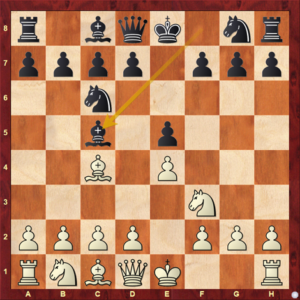
For White, the top recommendation is The Italian Game.
Why the Italian Game Works
- Natural Development: It logically executes opening principles: controlling the center, activating the King’s Knight, and placing the Bishop on an active diagonal.
- Clear Tactical Focus: The Bishop directly targets the square—the weakest point in Black’s starting position, defended only by the King.
- Manageable Theory: Unlike the sharp and extensive theory of the Ruy Lopez, the Italian Game offers clean, classical structures that prioritize piece activity and direct planning over rote memory.
Your Action Plan as White
- Open with 1.e4
- Against 1…e5, play 2.Nf3 followed by Bc4
- Castle Kingside on moves 4 or 5
- Develop your remaining Knight to c3 or d2
- Centralize your Rooks along the d- and e- files.
Step 3: Solid Resiliency as Black
Playing Black requires neutralizing White’s first-move initiative with a balanced, resilient setup.
Respond symmetrically with 1…e5. When White plays 2.Nf3, reply with 2…Nc6. This mirror approach reinforces identical strategic themes on both sides of the board, accelerating your understanding of classical piece play.
Against : 1.d4
When White opens with the Queen’s Pawn (1.d4), games tend to be more strategic and closed. Maintain a firm foothold in the center with a reliable structure:
- Reply with 1.d5
- Support your center with 2…e6
- Develop naturally with Nf6 and Be7
- Castle Kingside smoothly.
Step 4: Your Repertoire Cheat Sheet
Keep your setup lean. Stick to this foundation for your first 50 tournament games:
You Are Playing | Opponent Opening | Your System | Key First Moves |
White | Any standard response | Italian Game | 1.e4 2.Nf3 3.Bc4 |
Black | 1.e4 | Open Game | 1…e5 2…Nc6 |
Black | 1.d4 | Queen’s Gambit Declined Setup | 1…d5 2…e6 3…Nf6 |
Step 5: How to Learn Openings Efficiently
- Review Your First 5-10 Moves: After every game, evaluate your opening execution rather than just tactical blunders. Did you fight for the center? Did you move the same piece multiple times? Did you secure your King early
- Play Longer Time Controls: Practice on 15 + 10 or 30 + 0 time controls online to give yourself adequate time to evaluate candidate moves against opening principles.
- Study Master Games for Ideas: Read or watch high-level games to understand where pieces naturally belong in these structures rather than trying to memorize deep line variations.
Tournament Etiquette and Reality
- Accept the Learning Curve: Expect tough losses early on. Scoring 1.5 or 2 points out of 5 in your first classical tournament is a solid result while adapting to clock management and board sight.
- Pace Yourself: Avoid rushing through the opening phase even if the moves feel familiar. Verify candidate moves to prevent early tactical oversight.
- Record Your Games: Consistently writing down your moves on the scoresheet helps maintain focus and provides valuable material for post-game analysis.
Take your time
Chess, like any other sport or skill, needs time to master. Rome was not built in a day. Try and learn one new concept everyday and the cumulative knowledge will show up in your performance in your next tournament.
Set up your board, open with 1.e4, and enjoy the process.




One Response
This is soo helpful even for me as a coach!
Thank you,
Great insight Mr.Mwashe