Stop Calling It “Your Style”: Try the Isolate & Intensify Method

Stop Calling It “Your Style”: Try the Isolate & Intensify Method

Share this post :
Facebook
Twitter
LinkedIn
Pinterest

Leave a Reply

Your email address will not be published. Required fields are marked *

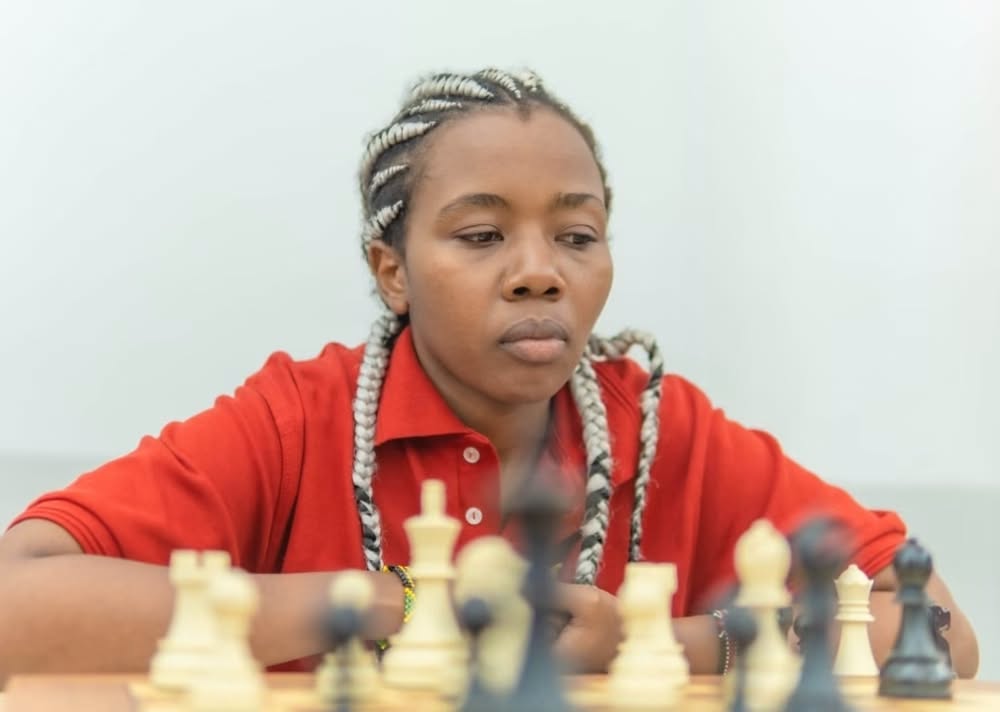
WIM Sasha Mongeli at a past tournament. Photo Credit: FIDE


Have you ever avoided a certain kind of chess position and told yourself, “That’s just not my style”?

I used to say those exact words.

The weakness I mistook for style

Earlier in my career, I wore the “tactical player” badge with pride. When I first broke onto the international scene—scoring 7/8 at the 2018 Chess Olympiad in Batumi to earn my Woman FIDE Master title—I loved open, sharp battles like the Scotch Game, where initiative and quick tactical blows decided the game. Quiet, manoeuvring positions? I told myself they weren’t my thing.

Eventually, I had to be honest with myself. I wasn’t avoiding closed or symmetrical structures because of an innate “style.” I was avoiding them because I lacked patience, prophylaxis, and deep positional understanding.

That is one of the easiest traps in chess: we label a weakness as a personal preference, and then we stop challenging it. The same thing happens when players call themselves “purely defensive” or “solid.” Often, they aren’t choosing defence because it suits them—they haven’t trained themselves to calculate or attack with confidence.

Here is what changed my trajectory as a competitor: you cannot truly know your style until you have trained yourself to handle the positions you dislike.

Get comfortable where you feel uncomfortable

To push past my plateau and compete on top boards for Kenya, I deliberately rebuilt my repertoire around the exact structures I used to find “boring.”

With Black, I committed to the Caro-Kann Defence—playing the Exchange, Advance, and Steinitz variations repeatedly against strong international opposition. With White, I added slow, strategic systems like the English Opening and queen’s gambit, forcing myself to win games through small positional advantages rather than early kingside fireworks.

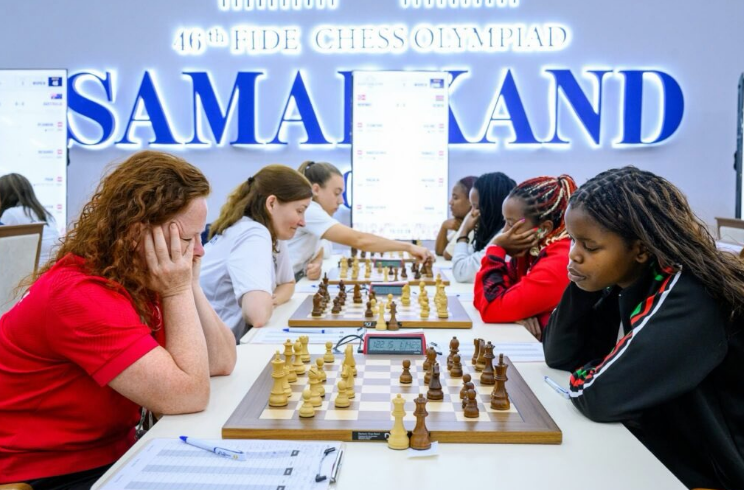
Over time, what used to be a glaring gap became one of my sharpest weapons—helping me win a 9/9 sweep at the 2022 Africa Zone 4.4 Championship, reach a 1928 FIDE rating, and post a 1990 performance rating on Boards 1 and 2 at the 2026 Chess Olympiad in Samarkand.

Two of my Olympiad games show how this shift works on the board:

  • Out-grinding a 2155 WIM in a “quiet” structure: In Round 2 of the 2026 Samarkand Olympiad, I faced Norwegian Woman International Master Ellen Hagesaether (2155) with the White pieces. Instead of gambling on chaotic complications against an opponent rated over 220 points higher, I steered the game into a Dutch defence (A80). Ten years ago, I would have grown impatient in a symmetrical structure. Instead, I leaned into the slow manoeuvring, maintained positional pressure, and converted a 57-move strategic battle for a 1–0 upset.
  • Finding fireworks inside a solid opening: Mastering positional openings doesn’t erase your tactical instinct—it gives it a launchpad. At the 2024 Budapest Olympiad against Sehba Shah, I played Black in the Caro-Kann Exchange Variation (1.e4 c6 2.d4 d5 3.exd5 cxd5 4.Bd3 Nc6 5.c3 Qc7 6.Nf3 Bg4 7. O-O Nf6 8.Bg5 e6 9.Nbd2 Bd6 10.Re1), a line many impatient players write off as too dry. Because I had studied the exact piece coordination of that quiet structure, my bishop and queen were already aimed at White’s kingside—allowing me to unleash the classic Greek Gift sacrifice 10…Bxh2+! 11.Kh1 Bd6 12.Nf1 Bh5 13.Bh4 Ng4 14.Bg3 Bxg3 15.Nxg3 Nxf2+!, winning the queen and ending the game in 15 moves.

That is the blueprint behind the Isolate & Intensify method:

  • Identify what you avoid. Look honestly at your recent losses: are you dodging quiet manoeuvring games, sharp opposite-side castling attacks, cramped setups, or technical endgames?
  • Isolate it. Pick one uncomfortable structure or opening family to work on rather than trying to overhaul your entire game at once.
  • Intensify your practice. Play openings that funnel your games directly into that structure, analyse master games in those exact pawn formations, and force yourself to sit in the discomfort until the patterns feel natural.

Style isn’t a limitation

Garry Kasparov was once asked whether he would choose a move leading to chaos or a move that solidified the position, assuming both were objectively equal. He answered that he would choose the solid move. Players like Mikhail Tal—or Arjun Erigaisi today—might instinctively lean toward the complications.

That preference is genuine style: having the complete toolkit to play any position well, while naturally gravitating toward certain imbalances when the board gives you a free choice.

The goal of training isn’t to hide behind a label. It is to become a complete player who can adapt to whatever the position demands—whether that is a 57-move endgame squeeze or a 15-move tactical strike. You don’t grow by practising what already feels easy. You grow by stepping straight into the positions that expose your gaps.

Your turn

What kind of chess position do you tend to avoid—and what makes it uncomfortable for you?

Drop your answer or a position you struggle with in the comments. If you aren’t sure where to start, ask me about a specific opening, pawn structure, or training routine, and let’s break it down together.

Time to isolate. Time to intensify. #ChessGrowth #KenyaChessHub
Share this post :
Facebook
Twitter
LinkedIn
Pinterest

Leave a Reply

Your email address will not be published. Required fields are marked *

Share this post :
Facebook
Twitter
LinkedIn
Pinterest

Leave a Reply

Your email address will not be published. Required fields are marked *

WIM Sasha Mongeli at a past tournament. Photo Credit: FIDE


Have you ever avoided a certain kind of chess position and told yourself, “That’s just not my style”?

I used to say those exact words.

The weakness I mistook for style

Earlier in my career, I wore the “tactical player” badge with pride. When I first broke onto the international scene—scoring 7/8 at the 2018 Chess Olympiad in Batumi to earn my Woman FIDE Master title—I loved open, sharp battles like the Scotch Game, where initiative and quick tactical blows decided the game. Quiet, manoeuvring positions? I told myself they weren’t my thing.

Eventually, I had to be honest with myself. I wasn’t avoiding closed or symmetrical structures because of an innate “style.” I was avoiding them because I lacked patience, prophylaxis, and deep positional understanding.

That is one of the easiest traps in chess: we label a weakness as a personal preference, and then we stop challenging it. The same thing happens when players call themselves “purely defensive” or “solid.” Often, they aren’t choosing defence because it suits them—they haven’t trained themselves to calculate or attack with confidence.

Here is what changed my trajectory as a competitor: you cannot truly know your style until you have trained yourself to handle the positions you dislike.

Get comfortable where you feel uncomfortable

To push past my plateau and compete on top boards for Kenya, I deliberately rebuilt my repertoire around the exact structures I used to find “boring.”

With Black, I committed to the Caro-Kann Defence—playing the Exchange, Advance, and Steinitz variations repeatedly against strong international opposition. With White, I added slow, strategic systems like the English Opening and queen’s gambit, forcing myself to win games through small positional advantages rather than early kingside fireworks.

Over time, what used to be a glaring gap became one of my sharpest weapons—helping me win a 9/9 sweep at the 2022 Africa Zone 4.4 Championship, reach a 1928 FIDE rating, and post a 1990 performance rating on Boards 1 and 2 at the 2026 Chess Olympiad in Samarkand.

Two of my Olympiad games show how this shift works on the board:

  • Out-grinding a 2155 WIM in a “quiet” structure: In Round 2 of the 2026 Samarkand Olympiad, I faced Norwegian Woman International Master Ellen Hagesaether (2155) with the White pieces. Instead of gambling on chaotic complications against an opponent rated over 220 points higher, I steered the game into a Dutch defence (A80). Ten years ago, I would have grown impatient in a symmetrical structure. Instead, I leaned into the slow manoeuvring, maintained positional pressure, and converted a 57-move strategic battle for a 1–0 upset.
  • Finding fireworks inside a solid opening: Mastering positional openings doesn’t erase your tactical instinct—it gives it a launchpad. At the 2024 Budapest Olympiad against Sehba Shah, I played Black in the Caro-Kann Exchange Variation (1.e4 c6 2.d4 d5 3.exd5 cxd5 4.Bd3 Nc6 5.c3 Qc7 6.Nf3 Bg4 7. O-O Nf6 8.Bg5 e6 9.Nbd2 Bd6 10.Re1), a line many impatient players write off as too dry. Because I had studied the exact piece coordination of that quiet structure, my bishop and queen were already aimed at White’s kingside—allowing me to unleash the classic Greek Gift sacrifice 10…Bxh2+! 11.Kh1 Bd6 12.Nf1 Bh5 13.Bh4 Ng4 14.Bg3 Bxg3 15.Nxg3 Nxf2+!, winning the queen and ending the game in 15 moves.

That is the blueprint behind the Isolate & Intensify method:

  • Identify what you avoid. Look honestly at your recent losses: are you dodging quiet manoeuvring games, sharp opposite-side castling attacks, cramped setups, or technical endgames?
  • Isolate it. Pick one uncomfortable structure or opening family to work on rather than trying to overhaul your entire game at once.
  • Intensify your practice. Play openings that funnel your games directly into that structure, analyse master games in those exact pawn formations, and force yourself to sit in the discomfort until the patterns feel natural.

Style isn’t a limitation

Garry Kasparov was once asked whether he would choose a move leading to chaos or a move that solidified the position, assuming both were objectively equal. He answered that he would choose the solid move. Players like Mikhail Tal—or Arjun Erigaisi today—might instinctively lean toward the complications.

That preference is genuine style: having the complete toolkit to play any position well, while naturally gravitating toward certain imbalances when the board gives you a free choice.

The goal of training isn’t to hide behind a label. It is to become a complete player who can adapt to whatever the position demands—whether that is a 57-move endgame squeeze or a 15-move tactical strike. You don’t grow by practising what already feels easy. You grow by stepping straight into the positions that expose your gaps.

Your turn

What kind of chess position do you tend to avoid—and what makes it uncomfortable for you?

Drop your answer or a position you struggle with in the comments. If you aren’t sure where to start, ask me about a specific opening, pawn structure, or training routine, and let’s break it down together.

Time to isolate. Time to intensify. #ChessGrowth #KenyaChessHub

Stop Calling It “Your Style”: Try the Isolate & Intensify Method

Share this post :
Facebook
Twitter
LinkedIn
Pinterest

Leave a Reply

Your email address will not be published. Required fields are marked *

WIM Sasha Mongeli at a past tournament. Photo Credit: FIDE


Have you ever avoided a certain kind of chess position and told yourself, “That’s just not my style”?

I used to say those exact words.

The weakness I mistook for style

Earlier in my career, I wore the “tactical player” badge with pride. When I first broke onto the international scene—scoring 7/8 at the 2018 Chess Olympiad in Batumi to earn my Woman FIDE Master title—I loved open, sharp battles like the Scotch Game, where initiative and quick tactical blows decided the game. Quiet, manoeuvring positions? I told myself they weren’t my thing.

Eventually, I had to be honest with myself. I wasn’t avoiding closed or symmetrical structures because of an innate “style.” I was avoiding them because I lacked patience, prophylaxis, and deep positional understanding.

That is one of the easiest traps in chess: we label a weakness as a personal preference, and then we stop challenging it. The same thing happens when players call themselves “purely defensive” or “solid.” Often, they aren’t choosing defence because it suits them—they haven’t trained themselves to calculate or attack with confidence.

Here is what changed my trajectory as a competitor: you cannot truly know your style until you have trained yourself to handle the positions you dislike.

Get comfortable where you feel uncomfortable

To push past my plateau and compete on top boards for Kenya, I deliberately rebuilt my repertoire around the exact structures I used to find “boring.”

With Black, I committed to the Caro-Kann Defence—playing the Exchange, Advance, and Steinitz variations repeatedly against strong international opposition. With White, I added slow, strategic systems like the English Opening and queen’s gambit, forcing myself to win games through small positional advantages rather than early kingside fireworks.

Over time, what used to be a glaring gap became one of my sharpest weapons—helping me win a 9/9 sweep at the 2022 Africa Zone 4.4 Championship, reach a 1928 FIDE rating, and post a 1990 performance rating on Boards 1 and 2 at the 2026 Chess Olympiad in Samarkand.

Two of my Olympiad games show how this shift works on the board:

  • Out-grinding a 2155 WIM in a “quiet” structure: In Round 2 of the 2026 Samarkand Olympiad, I faced Norwegian Woman International Master Ellen Hagesaether (2155) with the White pieces. Instead of gambling on chaotic complications against an opponent rated over 220 points higher, I steered the game into a Dutch defence (A80). Ten years ago, I would have grown impatient in a symmetrical structure. Instead, I leaned into the slow manoeuvring, maintained positional pressure, and converted a 57-move strategic battle for a 1–0 upset.
  • Finding fireworks inside a solid opening: Mastering positional openings doesn’t erase your tactical instinct—it gives it a launchpad. At the 2024 Budapest Olympiad against Sehba Shah, I played Black in the Caro-Kann Exchange Variation (1.e4 c6 2.d4 d5 3.exd5 cxd5 4.Bd3 Nc6 5.c3 Qc7 6.Nf3 Bg4 7. O-O Nf6 8.Bg5 e6 9.Nbd2 Bd6 10.Re1), a line many impatient players write off as too dry. Because I had studied the exact piece coordination of that quiet structure, my bishop and queen were already aimed at White’s kingside—allowing me to unleash the classic Greek Gift sacrifice 10…Bxh2+! 11.Kh1 Bd6 12.Nf1 Bh5 13.Bh4 Ng4 14.Bg3 Bxg3 15.Nxg3 Nxf2+!, winning the queen and ending the game in 15 moves.

That is the blueprint behind the Isolate & Intensify method:

  • Identify what you avoid. Look honestly at your recent losses: are you dodging quiet manoeuvring games, sharp opposite-side castling attacks, cramped setups, or technical endgames?
  • Isolate it. Pick one uncomfortable structure or opening family to work on rather than trying to overhaul your entire game at once.
  • Intensify your practice. Play openings that funnel your games directly into that structure, analyse master games in those exact pawn formations, and force yourself to sit in the discomfort until the patterns feel natural.

Style isn’t a limitation

Garry Kasparov was once asked whether he would choose a move leading to chaos or a move that solidified the position, assuming both were objectively equal. He answered that he would choose the solid move. Players like Mikhail Tal—or Arjun Erigaisi today—might instinctively lean toward the complications.

That preference is genuine style: having the complete toolkit to play any position well, while naturally gravitating toward certain imbalances when the board gives you a free choice.

The goal of training isn’t to hide behind a label. It is to become a complete player who can adapt to whatever the position demands—whether that is a 57-move endgame squeeze or a 15-move tactical strike. You don’t grow by practising what already feels easy. You grow by stepping straight into the positions that expose your gaps.

Your turn

What kind of chess position do you tend to avoid—and what makes it uncomfortable for you?

Drop your answer or a position you struggle with in the comments. If you aren’t sure where to start, ask me about a specific opening, pawn structure, or training routine, and let’s break it down together.

Time to isolate. Time to intensify. #ChessGrowth #KenyaChessHub

Share this post :
Facebook
Twitter
LinkedIn
Pinterest

Leave a Reply

Your email address will not be published. Required fields are marked *

Share this post :
Facebook
Twitter
LinkedIn
Pinterest

Leave a Reply

Your email address will not be published. Required fields are marked *